
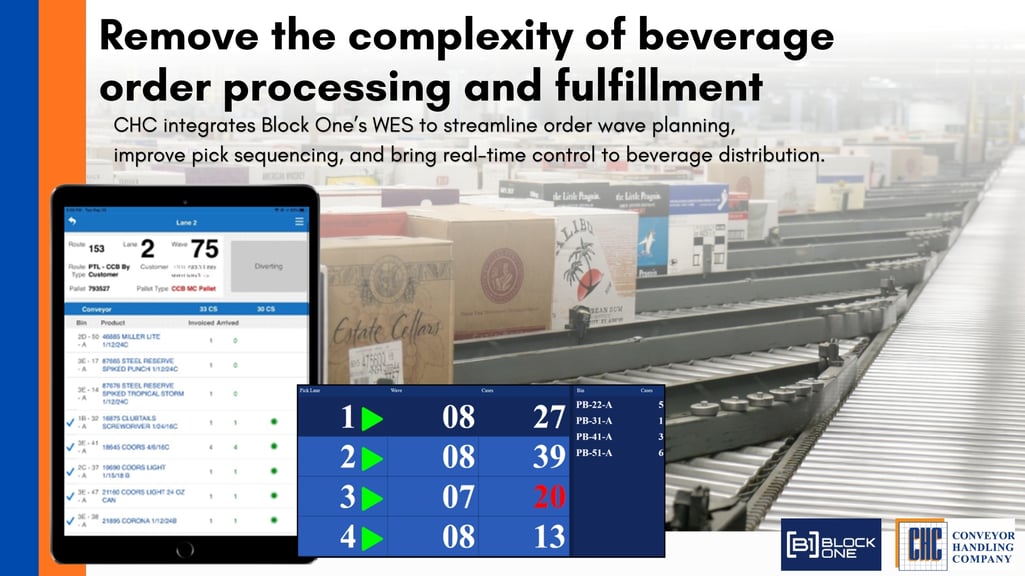
Bring structure to your WSB operation with efficient fulfillment logic.
Most beverage operations run into the same friction points as volume and SKU count increase. Wave planning becomes harder as multi-truck loading increases. Pick paths become inefficient, with associates revisiting the same locations repeatedly.
The mix of full case and bottle picking adds complexity and increases mis-picks and short picks. Visibility gaps make it difficult for supervisors to see wave status, pick line performance, or where congestion is building. At the dock, a single mis-load can create costly downstream issues, especially when routes are sequenced and stops must be loaded in reverse order.
To bring order to this chaos, CHC has integrated Block One's Warehouse Execution System (WES) for multiple client beverage operations to much success.
Explore the functionality, features, and benefits a WES platform can achieve with our guide below.
Block One Warehouse Execution System (WES)
The brain behind it all
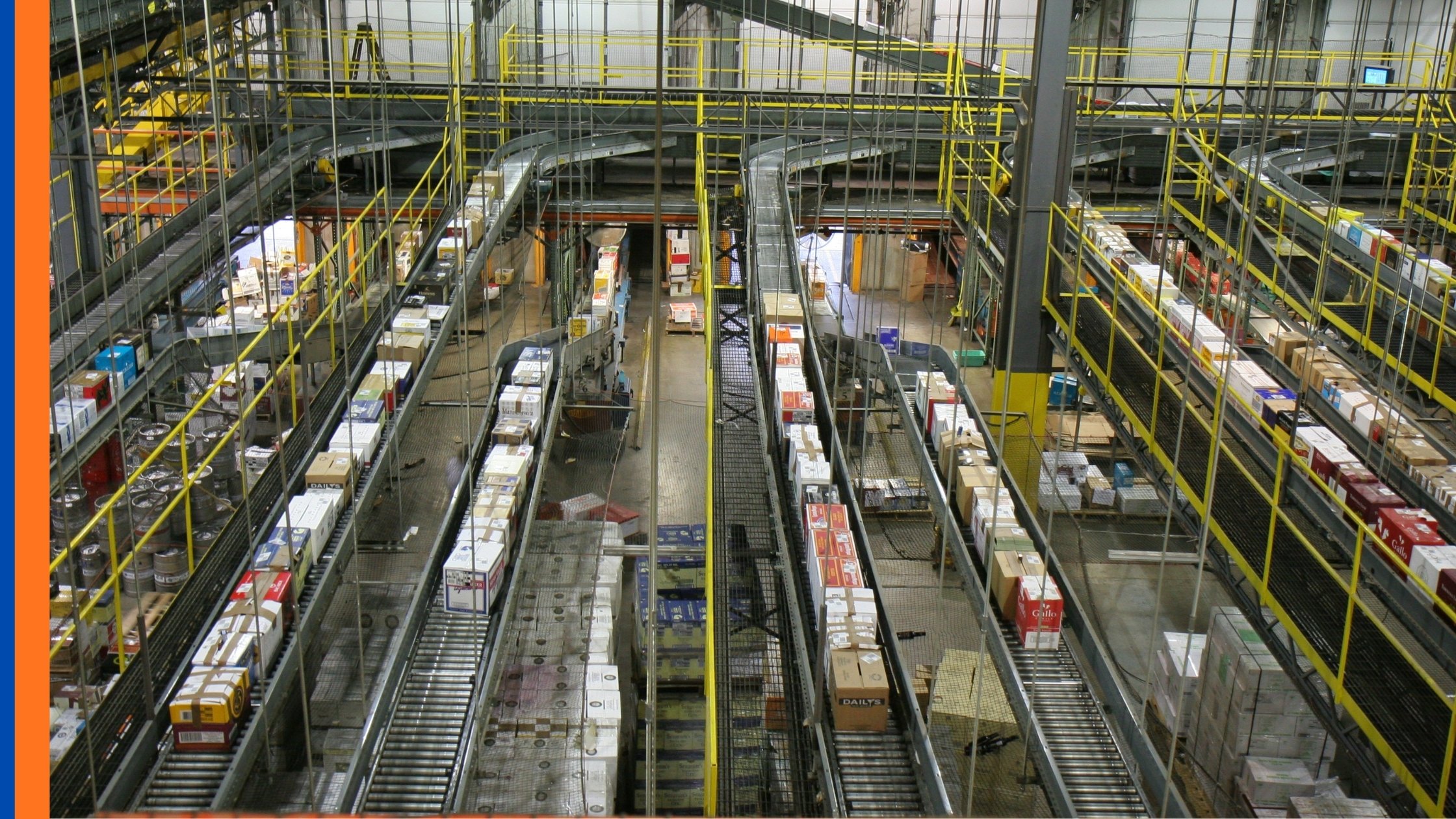
The Block One WES manages the complete case order flow beginning at wave creation, through pick modules, merges, sortation, and truck loading. It ties all these modules together within a data orchestration layer, using real-time order and equipment information to decide which cases and pallets move where, cycle times, speed, and exceptions.
The WES is used in tandem with a WMS to provide real-time order fulfillment metrics, while managing the logic behind slotting inventory, categorizing orders into manageable waves. This creates a continuous workflow that operates based on the most efficient wave algorithm the WES decides.
Functionality
-
- WMS Sync & Integration
Connects directly to your WMS to pull order data and keep execution aligned with real-time demand. - Wave Creation
Builds segmented waves of product based on order data for consistent and error-free truck loading. - Door Assignments
Assigns routes to specific doors so orders are directed to the correct load location without manual sorting.
- WMS Sync & Integration
-
- Full Case + Bottle Picking Interface
Guides associates through both full case and bottle pick workflows in a consistent and simple operator experience. - Pick Task Sequencing
Sequences picks to reduce repeat travel, batch work intelligently, and support reverse-stop loading logic. - Real-Time Visibility
Displays live wave and lane status across pick lines, merges, and loading doors so teams can spot issues early. - Vision-Based QC
Uses photo eye sensors to catch no-reads, over/under picks, and mis-picks inside pick modules before product reaches the dock. - Confirmation & Closeout
Confirms each case arrives to the correct truck and supports route closeout to reduce mis-loads and disputes.
- Full Case + Bottle Picking Interface
Features
- Operator App
Block One offers a WES app option that provides operators on the warehouse floor tools to resolve exceptions, intervene when needed, and keep the system moving. - Cloud Configuration & Management
The Block One WES can be integrated into your cloud setup to synchronize its data with your overall WMS environment. - Label-Less Image Recognition
Identifies cases by graphics when labels/barcodes aren’t available or legible. - Remote Maintenance
Enables remote troubleshooting and software updates to reduce downtime and provide ongoing support.
Real-World Use Example
Imagine a wine and spirits wholesaler receives a few orders to be fulfilled. The customer’s WMS sends the order data to the Block One WES, which organizes the picks into waves based on the number of trucks being loaded at a time and the type of product being picked for the order.
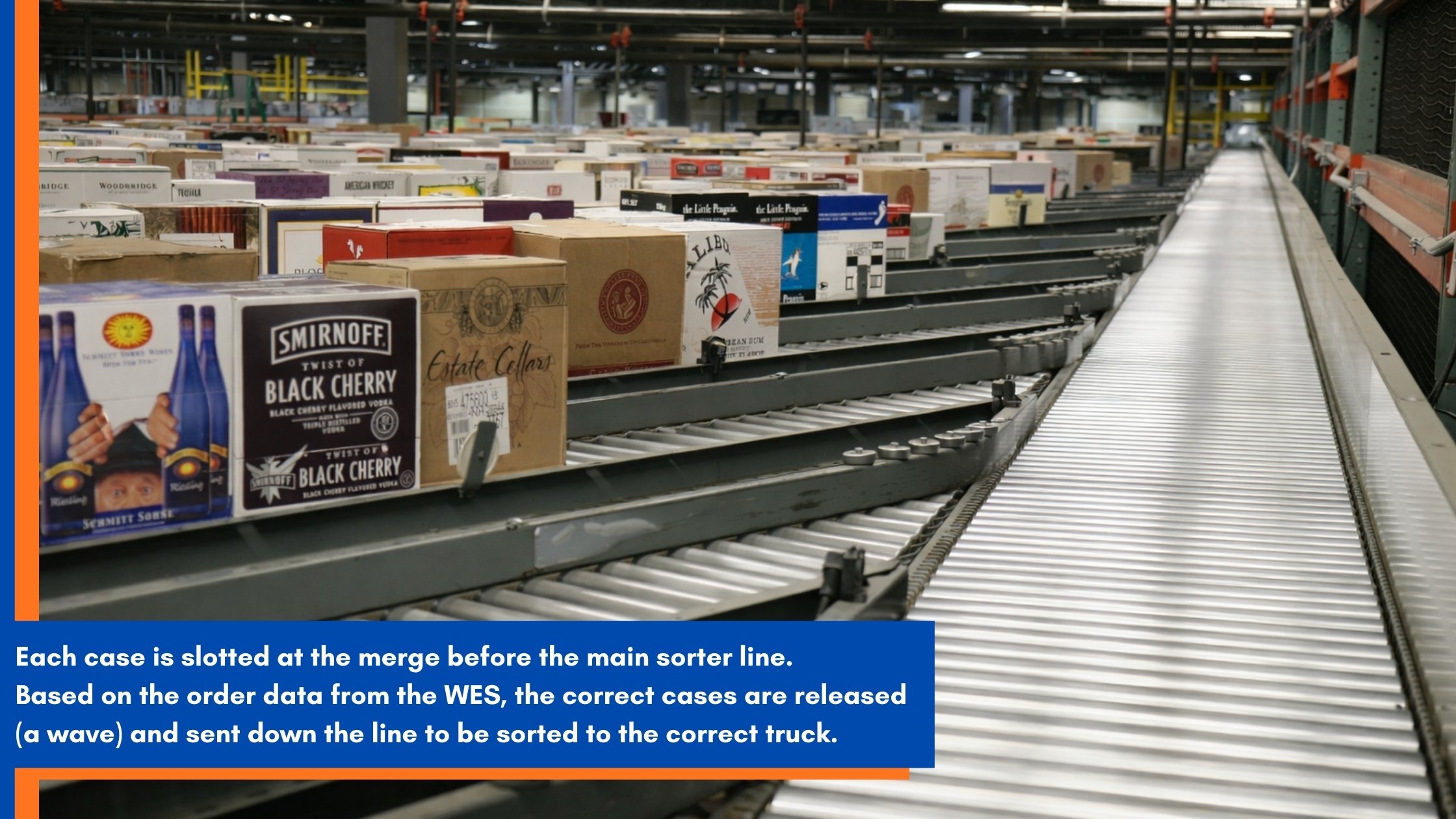
Once the cases are placed onto the conveyor system the WES uses a vision system to either read barcode labels or recognize the graphics to automatically release the product from each pick line at the merge towards the sorter, and finally the to the correct truck.
For example, if the warehouse is loading 3 trucks at a time, Wave 1 could include the picks for 2 liquor stores on each of those 3 trucks, so an associate would be directed to a particular product (i.e. cases of vodka) and would pick those cases of vodka those 6 stores ordered, then move to another pick location for the next item needed for those 6 stores. This reduces the number of times the associate needs to walk to that pick location.
The Block One WES organizes the picks so the trucks are loaded in reverse stop order meaning the first product loaded onto the truck goes all the way into the nose of the trailer, as that will be the last product delivered.
Interface
Transform operational data into simple, actionable visibility.

- Route Setup
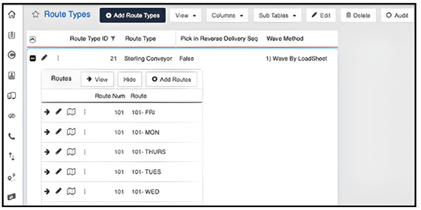
This screen allows supervisors to define and manage truck routes, door assignments, and delivery sequencing. This is where reverse stop logic is configured so the system understands exactly how product must flow to each trailer. Adjustments can be made in real time, which is critical in beverage environments where routes may change daily based on store demand.Instead of manually communicating changes to multiple departments, updates in the WES instantly cascade to picking, sortation, and loading.
- Pick Rules
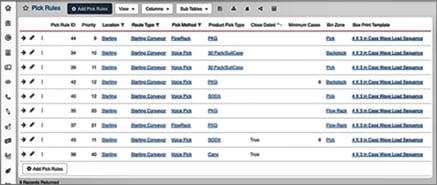
The Pick Rules interface governs how waves are constructed and how tasks are sequenced. This is where the system determines and displays the priority, location, route, the method, product type, its location, and amount to be picked, among other order data.
- Pick Lane Status Display
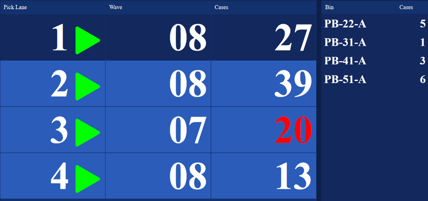
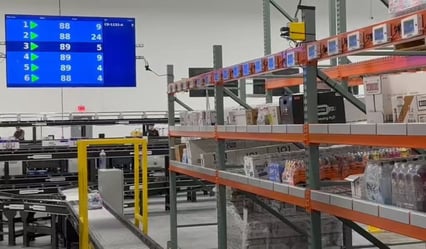
The Pick Lane Status Display provides real-time visibility into active lanes. Supervisors can quickly see the associated pick lane, its wave identifier, the number of cases left to process, the current bin location, and the remaining cases left to pick.
-
-
Order Reporting & Analytics Dashboard
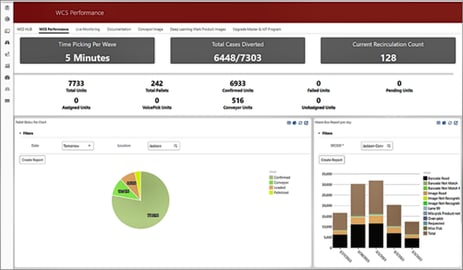
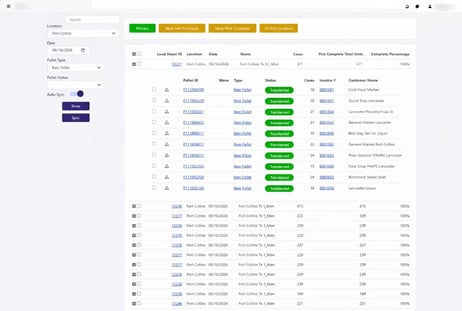
The Dashboard Reports view aggregates performance data from Block One's WES into measurable KPIs. The dashboard can track wave completion metrics, picking efficiency, total number of units and pallets vs. what has been processed, recirculation captures, and much more.
- Operator App
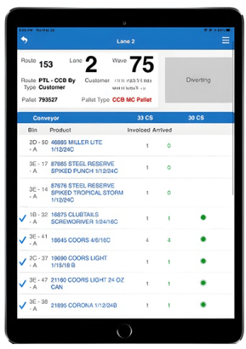
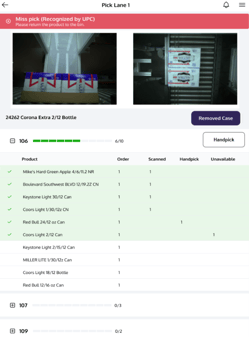
Warehouses can deploy operator tablets installed with Block One's WES application. This interface allows for real-time intervention if errors occur. Supervisors can view order progress and information, adjust tasks, or resolve issue notifications.
- Operator App
-
-
In Short: How Does A WES Help My Beverage Operation?
Beverage distributors deal with complex picking, high-SKU inventory, multi-truck loading, and strict delivery sequencing.
A WES solves these challenges by automatically organizing orders into optimized waves, directing pick tasks to reduce travel, and sequencing cases to the correct truck, cutting processing time and effort down substantially.
By coordinating picking, conveyor flow, and truck loading in real time, the Block One WES improves picking efficiency, increases load accuracy, and provides clear visibility into wave progress across the operation.
A WES turns your complex beverage process into a structured, highly efficient workflow that scales with growing order volume and SKU counts.
Can a WES drastically optimize your beverage distribution process?
CHC has significant experience in engineering successful automation systems for wine, spirits, and beer wholesalers and distributors.
If you are considering implementing a WES for your beverage operation, send CHC a message and our team will start the process on transforming
your system idea into reality.